Reverse Mortgage Proceeds Are Not Taxable Income and Here Is Why That Changes Retirement Planning
The Reverse Mortgage Benefit Most Financial Conversations Never Get To
Most discussions about reverse mortgages focus on the basics. Access to equity. No required monthly payments. Aging in place. Those benefits are real and meaningful. But there is a layer of the conversation that rarely gets the attention it deserves and for homeowners who are managing retirement income carefully it may be the most financially significant advantage of all.
Reverse mortgage proceeds are not considered taxable income.
Nathan Rufty at Canopy Mortgage works with homeowners 62 and older across California, Arizona, Nevada, and Utah and this tax planning dimension of the reverse mortgage is one of the most powerful tools he discusses with clients who are working to stretch their retirement savings as efficiently as possible.
What Non-Taxable Proceeds Actually Mean for Retirement Income Management
When you pull money from a traditional IRA or 401k that withdrawal counts as taxable income. Enough of those withdrawals and you move into a higher tax bracket. You may trigger income-based adjustments to Medicare Part B and Part D premiums that add hundreds of dollars per month in additional healthcare costs. You deplete tax-deferred accounts that were designed to compound over time.
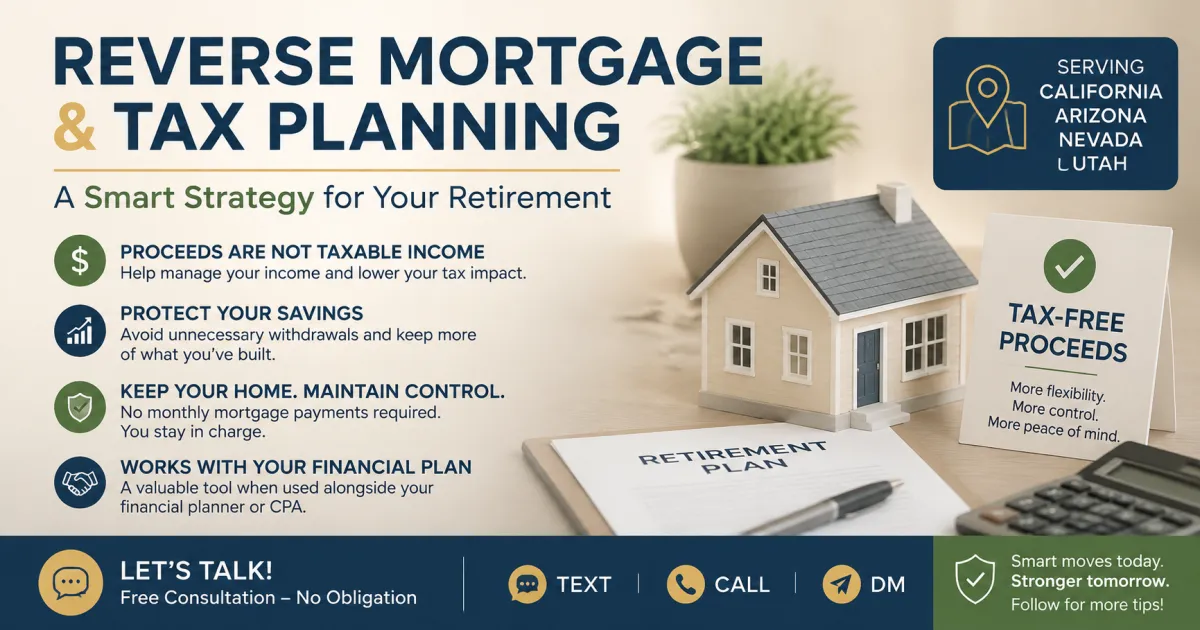
Reverse mortgage proceeds do none of those things. The money you access from your home equity through a reverse mortgage does not appear on your tax return as income. It does not push you into a higher bracket. It does not trigger the income thresholds that increase Medicare premiums. And it does not force you to draw down retirement accounts before it makes strategic sense to do so.
That flexibility creates real options for managing the tax efficiency of your retirement income in ways that most people do not realize are available to them.
How This Works Alongside Your Financial Planner or CPA
The most effective application of this strategy happens in coordination with the other professionals managing your financial life. A financial planner who understands how to sequence income sources in retirement can use a reverse mortgage line of credit or lump sum as a bridge that preserves tax-deferred accounts during years when drawing them would be particularly costly. A CPA can model the difference between a year where you fund lifestyle expenses from taxable retirement withdrawals versus a year where reverse mortgage proceeds cover those expenses while retirement accounts continue growing.
Working together those conversations can produce meaningful differences in how long retirement savings last and how much of what you have built actually stays in your hands rather than going to taxes or Medicare premium adjustments.
What Stays the Same
You keep full ownership and control of your home throughout the life of the reverse mortgage. No required monthly mortgage payments. The standard obligations of homeownership continue and the equity that remains after the loan balance is satisfied belongs to you or your heirs.
The Conversation Worth Having
Text, call, or DM Nathan Rufty at Canopy Mortgage anytime for a free consultation at 909-503-5600. He will walk you through every option with care and clarity and help you understand whether a reverse mortgage makes sense as part of your broader retirement and tax planning strategy. Follow along for more tips that help families make smart moves with their money.
Sources
HUD.gov
NRMLA.org
ConsumerFinancialProtectionBureau.gov
IRS.gov
Investopedia.com